If your office manager is scared to click “update plugins,” that’s the software talking, not your team.
WordPress made it possible for a clinic, a tint shop, or an insurance office to have a real site without hiring a newsroom. That part still deserves respect. What’s stuck is the way it lives on a server and the way add-ons get the keys to everything.
Cloudflare’s open-source answer is EmDash. New Amarillo Logic sites are built on Cloudflare with EmDash for the editor. If you need WordPress, we’re not the shop. See custom websites.
What WordPress got right
It put a dashboard in front of regular people. Change a phone number, add a photo, hit publish. Themes and plugins meant you could start from a template instead of a blank page. A whole living was built around that.
Treat that as the bar: a non-developer can still ship an hours change on a Tuesday.
Where it stuck
Plugins. A WordPress plugin is a PHP script that sits in the same room as the site. Database, files, the lot. That’s like hiring a painter and handing them the master key, the safe combo, and the alarm code because they need to open one hallway. Most of the ugly WordPress headlines start there, not in the core software. Cloudflare’s own write-up on EmDash is blunt about this: isolation was never the WordPress plugin model.
The lights stay on. WordPress wants a server that’s running even at 3 a.m. when nobody in Canyon is looking at your site. That’s a shop that leaves every bay light on all night so the first truck in the morning doesn’t wait. Fine when power is cheap and someone’s watching the panel. A pain when you’re the one who gets the “site is down” text.
The marketplace tax. Because those plugins are so powerful, people only trust the ones a central directory has stared at. That queue is slow, and it locks authors into one store. You feel it as “we can’t find a plugin that does X without five other plugins hanging off it.”
What EmDash is, in shop talk
EmDash is an open-source CMS. TypeScript, not PHP. The public pages are built with Astro, which is a fit for sites that are mostly pages and photos.
Sandboxed plugins. Each add-on runs in its own locked room (a Cloudflare Worker isolate). It has to declare what it can touch before you install it: send email, read a post, talk to one hostname. That’s a vendor who gets a key to the storeroom they named on the work order. You can read the list at install time, the way you’d read a permission sheet before you let a new app into QuickBooks.
Lights on when someone walks in. On Cloudflare it scales to zero: no visitor, no compute bill for sitting there. A request shows up, a worker wakes, the page goes out. You can still run it on a Node box if you want the machine in the building. The default we care about is the edge: same network we already host on, pages that feel fast on LTE.
Themes that paint. An EmDash theme is pages, layouts, and styles. It cannot run database operations. Bookkeeping stays in the office.
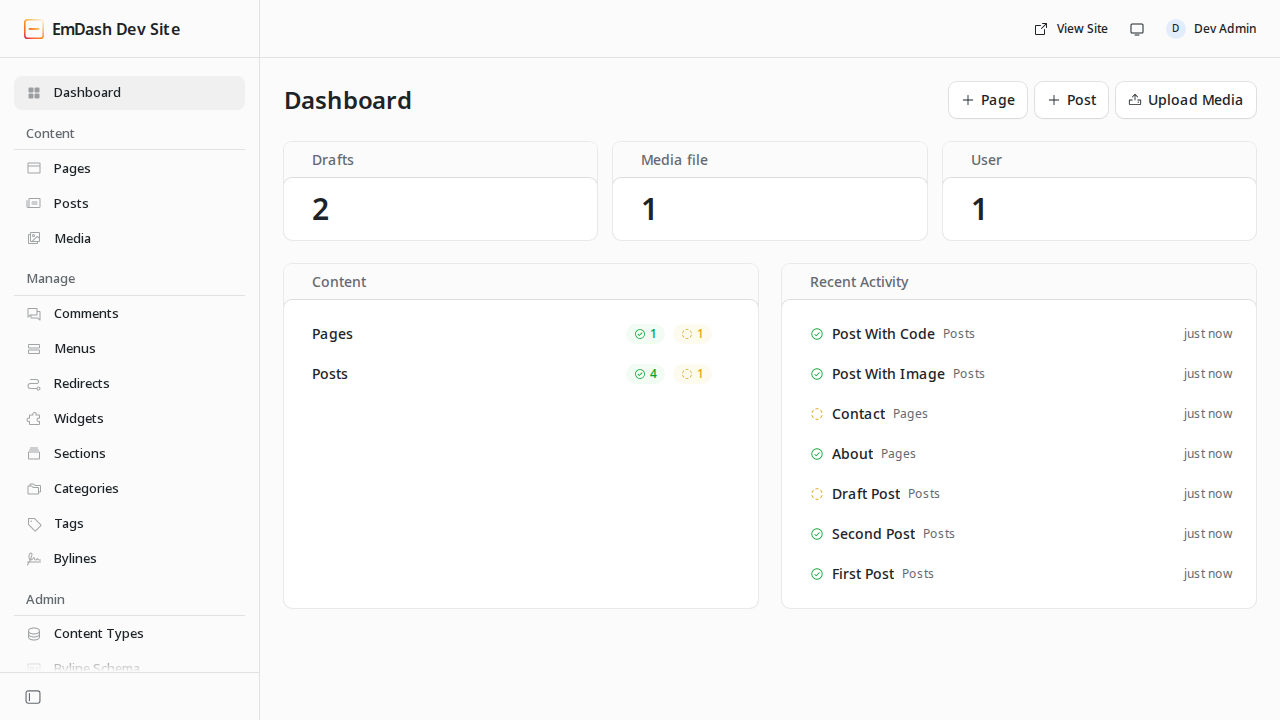
A dashboard, plus a radio to the shop. Editors still get an admin. Agents (the software kind) get a CLI and an MCP server: labeled tools. A helper can rename fields or move photos because you asked, inside drawers you labeled.
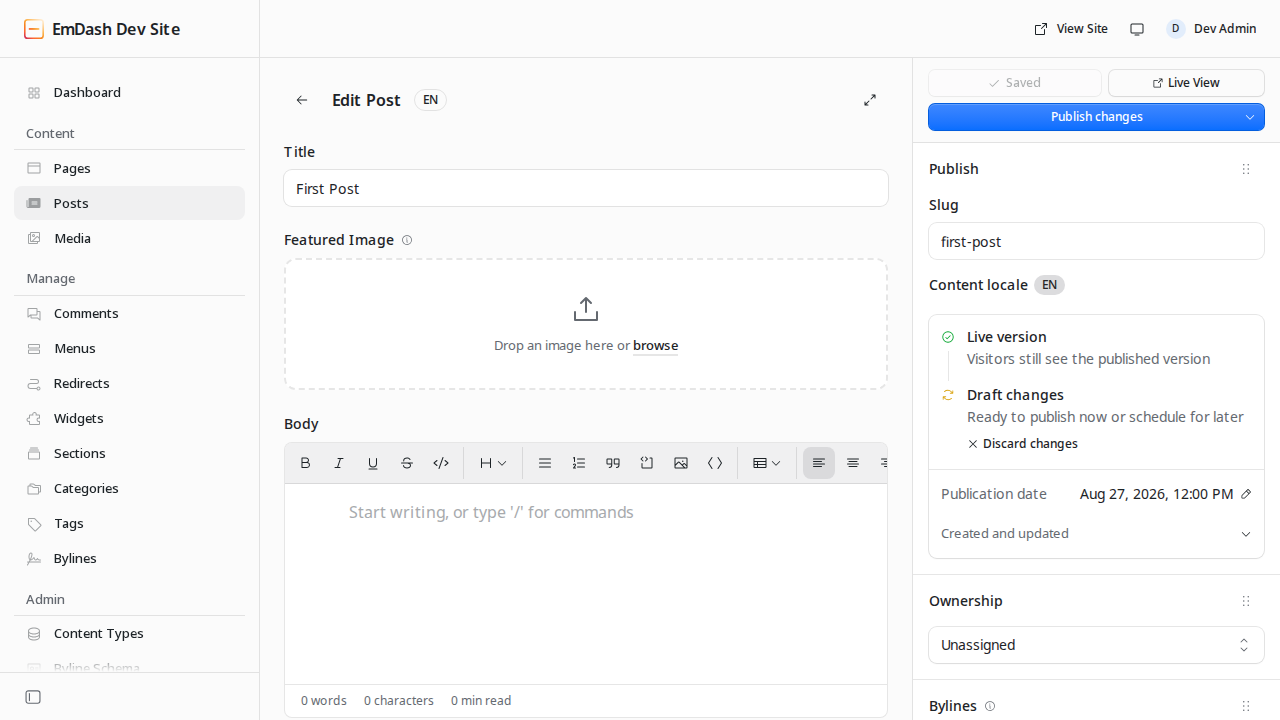
You can import a WordPress export (WXR) or use Cloudflare’s exporter plugin. Migration is a moving day. Content comes over. The old plugin zoo does not.
Side by side
How it runs. WordPress: PHP on a server that’s up all day. EmDash: TypeScript; serverless on Cloudflare, or Node if you insist.
Plugins. WordPress: same process as the site. EmDash: sandboxed; capabilities on a list you see first.
Themes. WordPress: a theme can reach into the database. EmDash: Astro theme; no DB ops.
Hosting feel. WordPress: shared host or VPS to babysit. EmDash: scale to zero, pay for work.
Maturity. WordPress: twenty-plus years, huge plugin store, every host on the planet. EmDash: early. Cloudflare is running their own blog on it; version 1 is still arriving. We are choosing it for new builds anyway. Early is the cost of getting out of the master-key model.
What this means on 45th or 4th
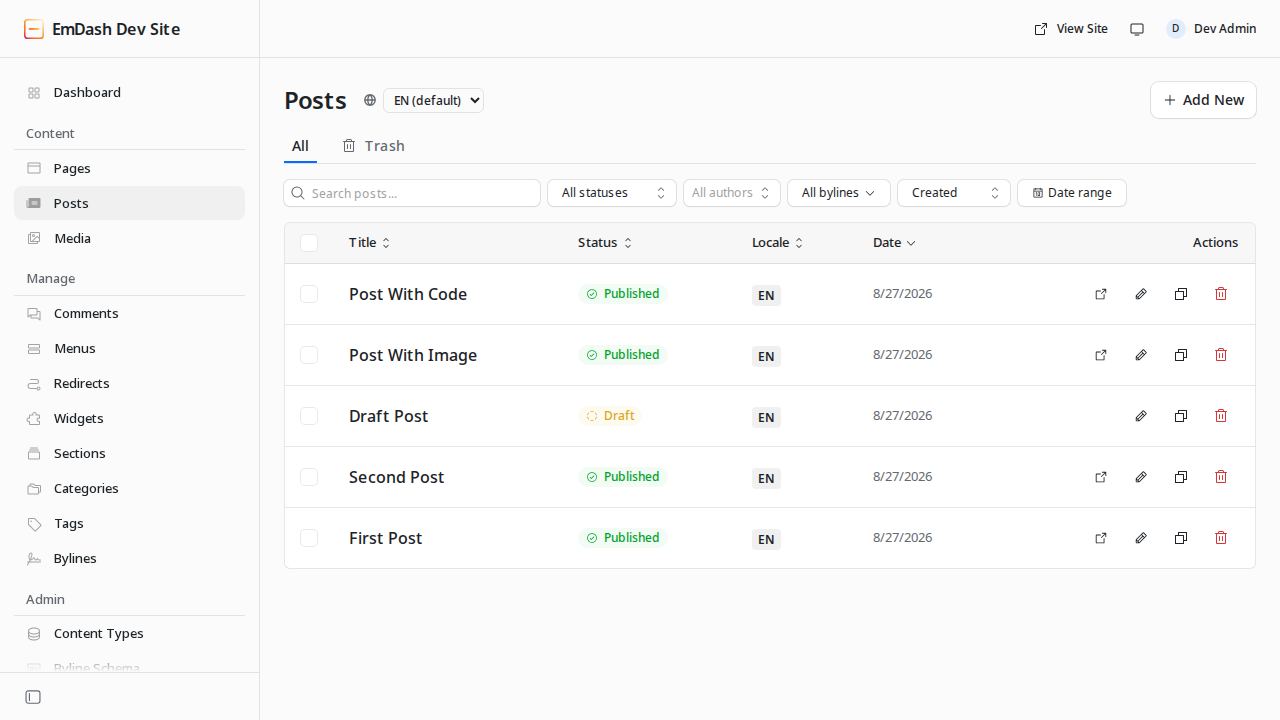
A site you own, that an office manager can edit, with hosting included on our custom builds, and plugin day that isn’t a security event. Phone answered in Canyon.
Agents will keep showing up in this stack. The useful version is the same as our other automations: the machine proposes, a human still hits yes. EmDash is built so that helper works from labeled drawers.
If your site is a museum of custom PHP, budget a real move. A 200-page brochure mill is not a Friday theme swap.
Who should wait
Stay on WordPress if a specific plugin is the business (membership, a particular booking widget nobody has rebuilt) and switching it is the project. We’ll tell you that on the call. We still won’t take the WordPress job.
Move when the pain is the stack: plugin dread, host renewals, a site that dies on parking-lot LTE, or you want a new site and don’t want to inherit 2014’s update problem.
FAQ
Is EmDash WordPress on Cloudflare? Same job: pages, editor, plugins. Different building. No WordPress code inside it. MIT licensed.
Can we keep WordPress and just change hosts? You can. New work here is Cloudflare plus EmDash for the editor.
Will our staff still be able to edit? Yes. Hours, photos, offers. We train the people who actually change those.
How is this different from Squarespace? You get a custom site we host. EmDash is the editor and plugin model underneath.
Next step
If you’re comparing a rebuild, start at custom websites: $1,500–$3,500, two to three weeks, hosting included. Call (806) 433-0154 or email hello@amarillologic.ai.